
Snow Bunting – hearty Arctic songbird
Snow Buntings have been studied relatively little in North America, owing to their remote breeding range in the high Arctic and their nomadic habits during winter.
The Snow Bunting is a small, hardy Arctic songbird known for its striking white plumage, often tinged with black or rusty tones. It breeds in high northern tundra regions and migrates south in winter, often appearing in flocks. Adapted to cold climates, it’s one of the earliest birds to return north in spring.
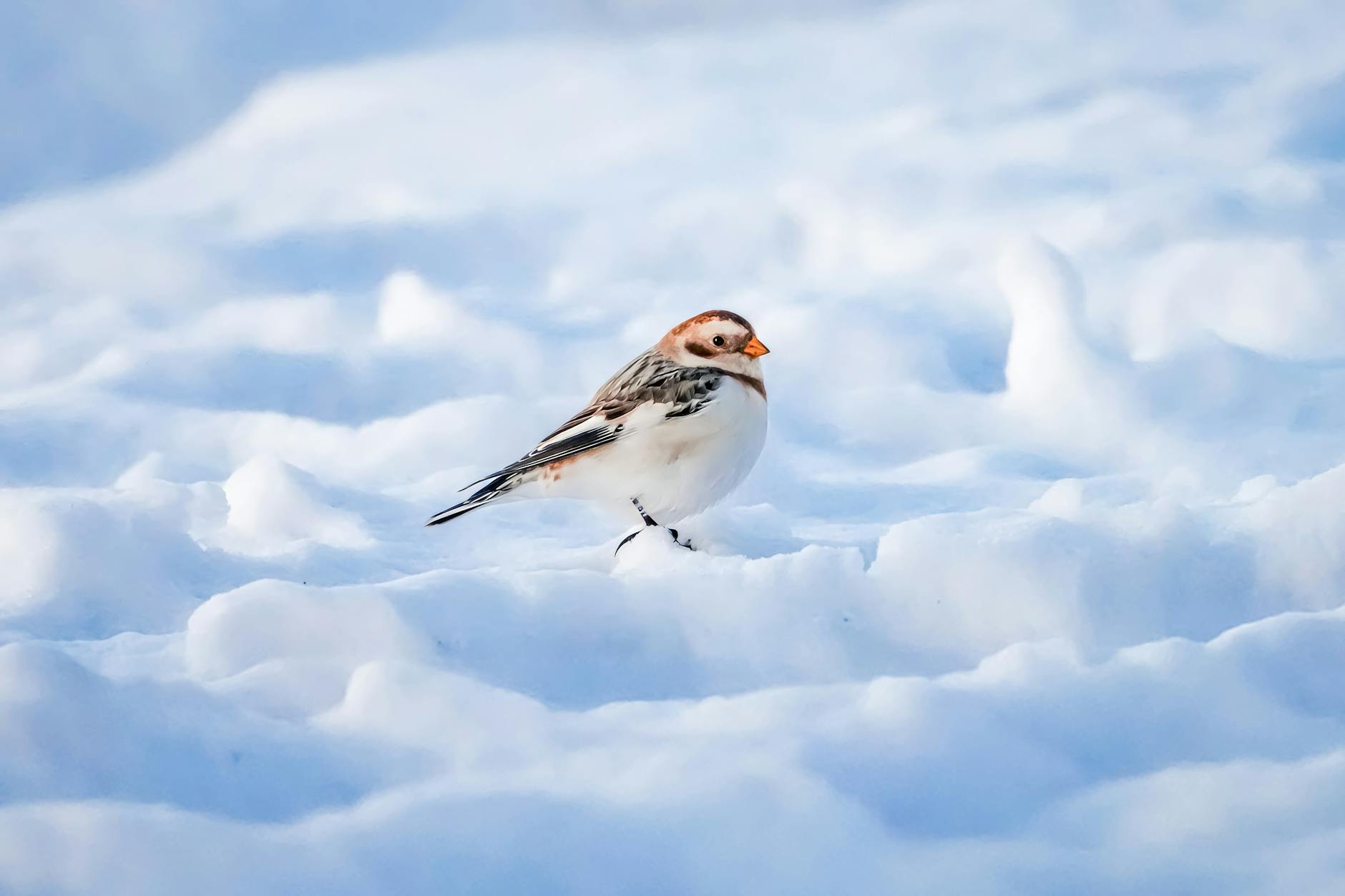
My experience with the Snow Bunting had been limited to winter sightings in North Carolina until I moved to the Upper Peninsula of Michigan in 2019. Now I see them every fall migration, mostly along roadsides out in the countryside.
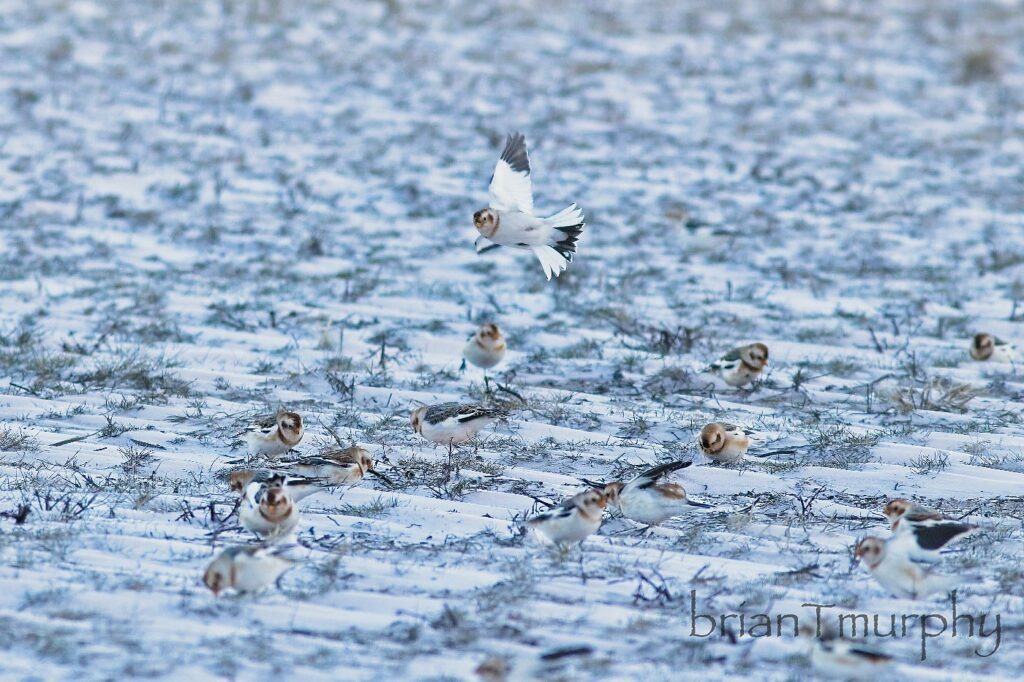
In North Carolina, Snow Buntings can be reliably seen along the Outer Banks, specifically at Oregon Inlet. They are not the easiest birds to get close to. Usually found in small to large flocks. The birds in the image below were not easy to capture. They like the beach, most likely reminding them of the tundra on the breeding grounds.

I located a flock of 40 birds at the airport just south of Marquette, MI, last winter. The wind-swept areas of grass between parking lots must have had some leftover food. It seemed such a barren place to be foraging. They are quick, flighty birds that tend to huddle close to the ground, creeping along foraging for seeds, though they can sometimes be seen perching on low branches. I have never heard them make a sound, the few times I got close enough. Maybe one day they will call out while flying overhead.
Snow Bunting Migration Patterns
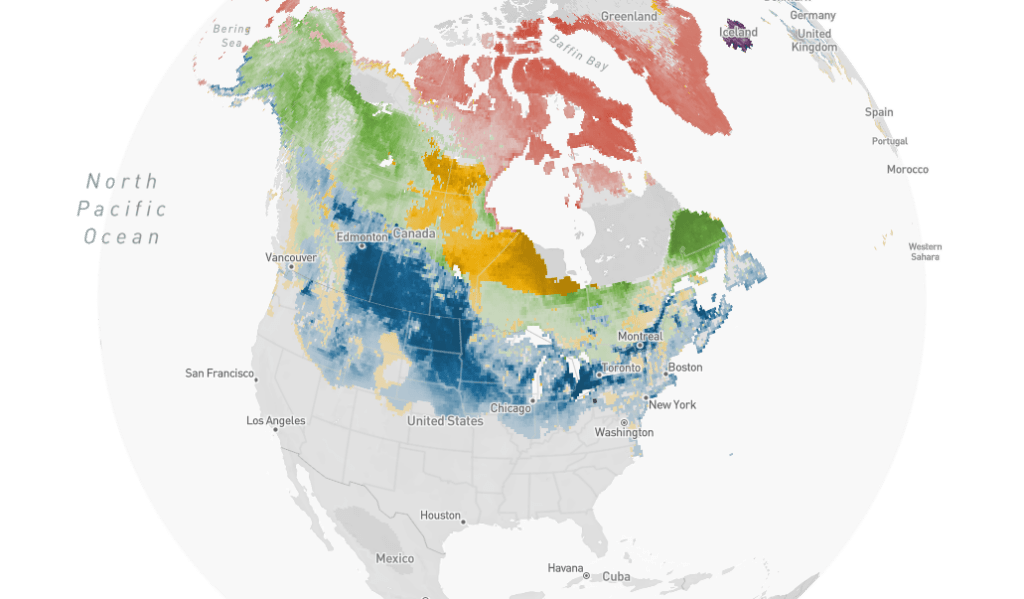
Along the southern Lake Superior shoreline, they arrive and are gone within a few weeks, with a few stragglers hanging out until after the snows begin. Like sparrows, they don’t like deep snow, so they will travel south as needed to escape the frigid cold northern winters. Click on the map below for more details on their migration and breeding grounds.
For a complete description of the Snow Bunting, check out Birds of the World (subscription required) or eBird.